
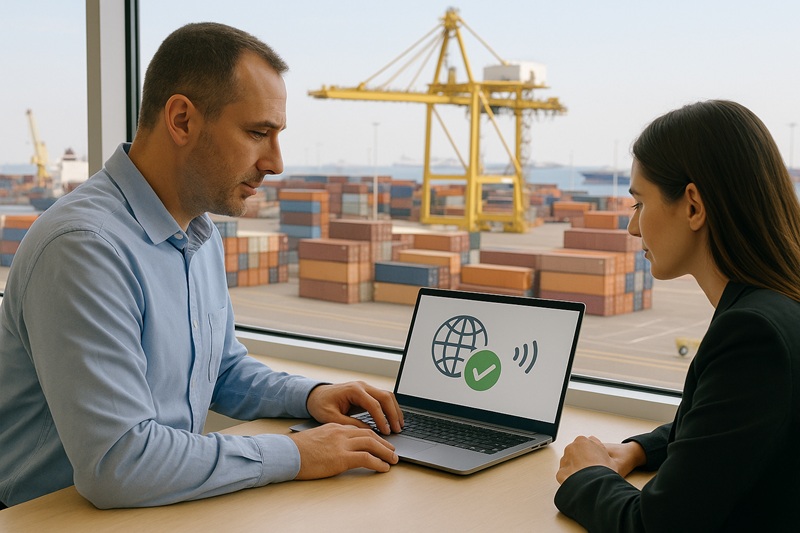
The logistics and shipping industry connects global trade. Every container shipped, cargo flight booked, or customs clearance completed involves financial transactions that cross borders and currencies. From freight forwarders to port operators, smooth payment flows are essential for maintaining efficiency, trust, and profitability across complex international supply chains.
The Role of Payments in Global Logistics
At its core, logistics is about coordination — and payments are part of that coordination. A single shipment may involve:
- Exporters and importers
- Shipping lines or airlines
- Freight forwarders
- Customs brokers
- Insurance and inspection companies
Each party expects timely and accurate settlements. Delays or miscommunications in payments can stall cargo, trigger demurrage charges, or disrupt delivery schedules. Efficient financial operations are therefore just as vital as physical transportation.
Why International Payments in Logistics Are Complex
Logistics transactions span multiple jurisdictions, currencies, and regulatory environments. The challenges often include:
- Currency conversions for contracts priced in USD, EUR, CNY, or local currencies.
- Different payment terms, from advance deposits to post-delivery settlements.
- Banking restrictions in certain trade corridors or sanctioned regions.
- Discrepancies in invoicing due to time zone differences and exchange rate changes.
These factors make logistics payments one of the most intricate areas of global finance, requiring precision, transparency, and compliance management.
Currency and Contract Management
Most international shipping contracts are denominated in major reserve currencies like USD or EUR. However, freight forwarders and carriers operating in emerging markets may need to handle additional conversions into local currencies to pay staff, agents, or port fees.
To reduce exposure to currency risk, many logistics firms use:
- Multi-currency accounts to collect and disburse funds in different currencies.
- Forward exchange contracts to lock in rates for long-term agreements.
- Automated FX platforms that convert revenue at optimal times.
These strategies ensure predictable cash flow and protect margins from currency volatility.
Payment Flows in Freight Operations
A typical shipment involves several payment stages:
- The shipper pays a freight forwarder or carrier to transport goods.
- The freight forwarder pays subcontractors — such as trucking or warehousing partners — often in different countries.
- Insurance and customs fees are settled with third-party service providers.
- Upon delivery, proof-of-delivery documents trigger the release of final payments or deposits held in escrow.
Because each participant operates in a different financial environment, payment platforms must synchronize transactions with documentation like bills of lading, invoices, and customs declarations.
Digitalization and Payment Automation
Traditionally, logistics relied on paper invoices, manual wire transfers, and faxed confirmations. The rise of digital freight platforms and fintech integration has changed this dynamic.
Automated payment systems now:
- Match invoices with shipment data automatically.
- Trigger payouts upon delivery confirmation.
- Generate audit-ready reports for compliance.
- Reduce administrative workload by centralizing billing.
Automation also minimizes disputes, as all financial transactions are backed by verified shipment data.
Cross-Border Compliance and Sanctions Screening
Global logistics companies must adhere to strict compliance frameworks. Payments that pass through multiple jurisdictions must comply with:
- AML (Anti-Money Laundering) and CFT (Counter-Terrorist Financing) laws.
- Sanctions lists issued by the US (OFAC), EU, and UN.
- Export control regulations, particularly for dual-use or sensitive goods.
To stay compliant, companies implement real-time transaction screening tools that verify each counterparty and prevent transfers to restricted entities. Fintech partners often provide these tools through APIs, integrating compliance into every transaction flow.
Shipping Insurance and Escrow Models
To mitigate risk in high-value shipments, many companies use escrow payment models. Funds are held by a neutral third party and released once the goods arrive and documentation is verified.
This model:
- Protects the buyer from non-delivery.
- Guarantees the seller receives payment upon proof of delivery.
- Reduces disputes and accelerates trust in new trade partnerships.
Some fintech platforms now offer smart contract–based escrow systems, using blockchain to automate release conditions and maintain transparency.
Payment Consolidation Across Carriers and Regions
Large logistics firms manage operations across multiple carriers, ports, and currencies. Consolidating payments into one system simplifies accounting and reduces bank fees.
Centralized treasury systems can:
- Handle all payables and receivables through a single dashboard.
- Convert and distribute funds automatically to subsidiaries.
- Provide real-time insights into liquidity across regions.
This level of control helps companies negotiate better FX rates and optimize capital allocation.
The Role of Fintech in Freight Finance
Fintech innovation has entered freight and shipping finance through:
- Digital trade finance platforms that provide short-term credit to exporters.
- Invoice factoring systems that let companies receive payment immediately after shipment.
- Blockchain-based trade documentation ensuring transparent, tamper-proof transaction trails.
These solutions accelerate the payment cycle and reduce dependence on traditional bank financing.
Handling Local Port and Customs Payments
Each country’s ports and customs authorities have specific payment systems. Manual local payments can be time-consuming and risky.
Fintech companies now integrate local payment rails into global logistics platforms, enabling:
- Instant customs fee payments in local currencies.
- Automated tax documentation uploads.
- Centralized reconciliation for import/export operations.
This speeds up customs clearance and reduces errors caused by manual bank transfers.
Managing Cash Flow in Global Supply Chains
Payment delays at one point in the supply chain can ripple through the entire network. Late settlements with a carrier can delay port handling, leading to demurrage charges.
To prevent this, logistics firms use predictive cash flow models supported by payment analytics. By forecasting when payments will clear, companies can plan shipping schedules and avoid financial bottlenecks.
The Future: Real-Time Global Settlement
The logistics industry is gradually moving toward real-time cross-border settlement. Emerging networks like SWIFT gpi, RippleNet, and regional instant payment systems will soon allow cargo operators to confirm and receive payments instantly, regardless of geography.
Integration of ISO 20022 messaging will further improve data quality, making invoices, shipment details, and payment confirmations part of a unified financial record.